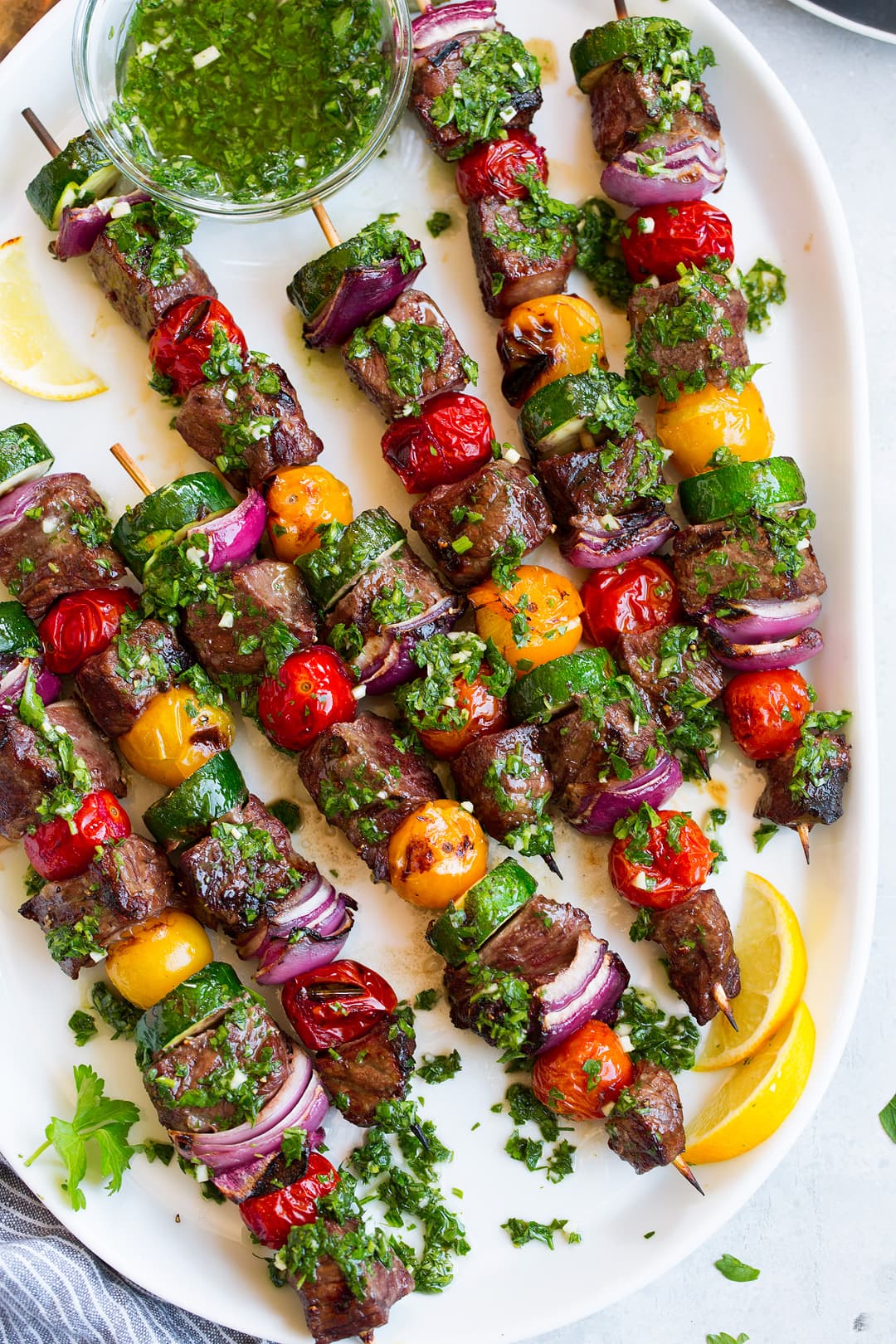
Grill Like a Pro: Steak Kebabs with Homemade Chimichurri
There’s something undeniably satisfying about the sizzle of meat on a hot grill, especially when it’s skewered to perfection and destined to be drizzled with a vibrant, herbaceous sauce. Steak kebabs are a perennial barbecue favorite, offering bite-sized pieces of succulent beef along with colorful vegetables. But what truly elevates this dish from good to extraordinary is a generous dollop of homemade chimichurri. This Argentinian powerhouse sauce, bursting with fresh herbs, garlic, and a hint of tang, transforms simple grilled steak into an unforgettable culinary experience. If you’re ready to master the art of grilling and impress your guests, dive into creating the ultimate
steak kebabs with chimichurri.
The Art of Perfect Steak Kebabs
Crafting the ideal steak kebab starts long before the meat hits the grill. It's a combination of choosing the right cut, precise preparation, and thoughtful assembly.
Choosing Your Cut: The Foundation of Flavor
The success of your steak kebabs hinges significantly on the quality and type of beef you select. You want a cut that's tender enough to cook relatively quickly on a skewer, yet robust enough to stand up to the grill's intense heat.
- Sirloin (Top or Center Cut): A fantastic all-rounder, offering good flavor and tenderness without breaking the bank. It holds its shape well when cubed.
- Ribeye: For those who appreciate a richer, more marbled steak. Ribeye will be incredibly tender and flavorful, but the fat can cause flare-ups on the grill, so manage your heat carefully.
- Tenderloin (Filet Mignon): The ultimate in tenderness, tenderloin kebabs will melt in your mouth. It's a leaner cut, so be careful not to overcook it.
- Flank Steak or Skirt Steak: While incredibly flavorful, these cuts are best if you marinate them for a longer period (at least 4 hours, preferably overnight) to ensure tenderness. Cut against the grain after grilling for the best texture.
Aim for fresh, good-quality meat from a reputable butcher. Look for an even color and minimal excess liquid.
Prepping Your Meat: Uniformity is Key
Once you have your chosen cut, proper preparation is crucial for even cooking.
- Cube Uniformly: Cut the steak into 1 to 1.5-inch cubes. Consistency in size is paramount; otherwise, smaller pieces will overcook while larger ones remain undercooked.
- Marinate for Maximum Flavor (Optional, but Recommended): While chimichurri is the star, a simple marinade can add another layer of flavor and help tenderize the meat, especially with leaner cuts. A basic marinade could include olive oil, soy sauce, Worcestershire sauce, garlic powder, onion powder, and black pepper. Marinate for at least 30 minutes, or up to 4 hours for flank or skirt steak. For more in-depth tips on achieving truly succulent results, you might want to explore articles like Mastering Juicy Steak Kebabs & Zesty Chimichurri.
Assembling Your Kebabs: The Colorful Presentation
Skewering is where you bring everything together.
- Choose Your Skewers:
- Wooden Skewers: If using wooden skewers, soak them in water for at least 30 minutes before grilling to prevent them from burning.
- Metal Skewers: Reusable and durable, metal skewers conduct heat, which can help cook the meat from the inside out.
- Vegetable Choices: Complement your steak with vegetables that cook at a similar rate. Bell peppers (any color), red onion, zucchini, cherry tomatoes, and mushrooms are excellent choices. Cut larger vegetables into pieces roughly the same size as your steak cubes.
- Spacing: Don’t pack the skewers too tightly. Leave a little space between each piece of meat and vegetable. This allows for even cooking and better caramelization. Alternate steak with veggies for a visually appealing and balanced kebab.
Crafting the Ultimate Homemade Chimichurri
While the grilled steak is undoubtedly delicious, it's the
homemade chimichurri that truly steals the show. This vibrant, herbaceous sauce is incredibly fresh, pungent, and surprisingly easy to make. It's the perfect counterpoint to rich, grilled meat.
Essential Ingredients: The Heart of the Sauce
An authentic Argentinian chimichurri relies on a few core ingredients.
- Fresh Parsley: Flat-leaf (Italian) parsley is preferred for its robust flavor. This is the main herb.
- Fresh Oregano: A crucial aromatic that adds depth. Use fresh if possible, but a teaspoon of dried oregano can substitute.
- Garlic: Plenty of fresh garlic cloves provide a pungent kick.
- Red Wine Vinegar: The acid component that brightens and balances the sauce.
- Olive Oil: A good quality extra virgin olive oil is essential for body and flavor.
- Red Pepper Flakes: For a subtle warmth and a gentle kick. Adjust to your spice preference.
- Salt and Black Pepper: To season and enhance all the flavors.
The Method: Simple Steps to Flavor Paradise
Making chimichurri is less about precise cooking and more about careful chopping and blending.
- Finely Chop Herbs and Garlic: Traditionally, chimichurri is made by finely hand-chopping all the ingredients. This creates a rustic texture and prevents the herbs from bruising too much. However, for convenience, a food processor can be used. If using a food processor, pulse the parsley, oregano, and garlic until finely minced, being careful not to over-process into a paste.
- Combine and Mix: In a bowl, combine the chopped herbs and garlic with the red pepper flakes, salt, and black pepper.
- Add Vinegar and Oil: Pour in the red wine vinegar and then slowly drizzle in the olive oil while stirring constantly until well combined and slightly emulsified. The sauce should be loose but not oily.
- Rest for Flavor Development: This step is crucial! Allow the chimichurri to rest at room temperature for at least 15-30 minutes, or even better, an hour. This allows the flavors to meld and deepen beautifully.
For an even deeper dive into achieving that authentic flavor, you might enjoy reading
Elevate Your BBQ: Steak Kebabs with Authentic Chimichurri.
Customizing Your Chimichurri: Personal Touches
While the classic recipe is perfect, feel free to experiment:
- Add a Citrus Twist: A squeeze of fresh lemon juice can add another layer of brightness.
- Include Cilantro: Some variations include fresh cilantro for a different herbal note.
- Extra Heat: For those who like it spicy, add finely minced fresh jalapeño or serrano pepper.
- Smoked Paprika: A pinch of smoked paprika can add a subtle smoky depth.
Grilling Techniques for Pro-Level Results
Now that your kebabs are assembled and your chimichurri is resting, it’s time to hit the grill. Grilling
perfect steak kebabs requires attention to heat and timing.
Preheat is Key: Build Your Heat Zone
Always start with a clean, preheated grill. This prevents sticking and ensures beautiful sear marks.
- Gas Grill: Preheat to medium-high (around 400-450°F / 200-230°C).
- Charcoal Grill: Arrange coals for two zones – a hot direct heat zone and a cooler indirect heat zone.
Lightly oil your grill grates before placing the kebabs to prevent sticking.
Cooking to Perfection: The Sizzle and Sear
The key to juicy kebabs is a good sear followed by even cooking.
- Direct Heat: Place the kebabs directly over the hottest part of the grill. Grill for 2-3 minutes per side, rotating frequently, until all sides are nicely seared and slightly charred. This quick, high-heat cooking creates a delicious crust.
- Internal Temperature: For accurate doneness, use an instant-read meat thermometer. Insert it into the center of a piece of steak, avoiding the skewer.
- Rare: 120-125°F (49-52°C)
- Medium-Rare: 125-130°F (52-54°C) - Recommended for most steak cuts on kebabs
- Medium: 135-140°F (57-60°C)
- Medium-Well: 145-150°F (63-66°C)
Remember that carryover cooking will increase the temperature by about 5 degrees after removal from the grill.
- Manage Flare-Ups: If fat from the meat causes flare-ups, move the kebabs to a cooler part of the grill temporarily or use indirect heat.
Resting Your Meat: The Secret to Juiciness
Once your steak kebabs reach your desired internal temperature, remove them from the grill and place them on a clean cutting board or platter. Tent loosely with foil and let them rest for 5-10 minutes. This allows the juices to redistribute throughout the meat, resulting in a more tender and juicy bite. Skipping this step is a common mistake that leads to dry steak.
Serving Suggestions & Pairing
The beauty of
steak kebabs with chimichurri is their versatility. They're a complete meal in themselves, but can be wonderfully complemented by various sides.
- Classic Companions: Serve alongside fluffy white rice to soak up extra chimichurri, a fresh green salad, or grilled corn on the cob.
- Bread: Crusty bread or warm pita is perfect for scooping up any leftover chimichurri.
- Beverages: A bold Malbec, a crisp Sauvignon Blanc, or even a refreshing craft beer can perfectly complement the rich steak and herbaceous sauce.
Ultimately, the best way to serve these delectable kebabs is with a generous spoon of the vibrant homemade chimichurri drizzled over them. The cool, piquant sauce against the warm, savory steak creates a flavor explosion in every bite.
Conclusion
Mastering
steak kebabs with chimichurri is a testament to the power of fresh ingredients and simple, effective grilling techniques. From selecting the perfect cut of beef and uniformly cutting your ingredients to crafting a bright, zesty chimichurri, each step contributes to a dish that is as impressive as it is delicious. By following these professional tips – choosing the right steak, prepping meticulously, letting the chimichurri flavors meld, and grilling with precision – you’re not just making a meal; you’re creating an experience. So fire up that grill, mix up that vibrant sauce, and get ready to enjoy steak kebabs like you've never had them before. Your taste buds, and your guests, will thank you.